
 BizSpace Portal
 Payroll Portal
 Supply Chain Financing
Reporting
Standards
We consider the following standards to structure our non-financial reporting:
UN Global Compact
Yoma Bank joined the UN Global Compact on 4th December 2015. Since then, we have regularly issued our COP reports. They can be found here.
Global Reporting Initiative (GRI) Standards
Yoma Bank aligns its non-financial reporting with the GRI Standards to support transparent, consistent, and comparable disclosure of sustainability-related information. The Bank has adopted the GRI framework in reporting relevant environmental, social, and governance (ESG) data, enabling stakeholders to better assess and compare the Bank’s sustainability performance against industry peers and established reporting practices.
Corporate Governance Scorecard
You can find our report against the Myanmar Corporate Governance Scorecard here.
Sustainable Development Goals (SDGs)
| SDGs | Why? | Metrics (FY 2025/2026) |
 | Promote better education so that children, students and people across the country can access better educational opportunities, develop the skills for tomorrow and support themselves. |
|
 | Offer equal opportunities to our employees, regardless of their gender, sexual orientation, age or professional background. |
|
 | Enable Myanmar’s economy by offering our customers the products and services they need to support the development of the country. |
|
 | Help the development of quality infrastructure that will become the backbone of Myanmar’s economy. |
|
 | Empower Myanmar’s people so that they can access products to finance their future, fostering new lifestyles. |
|
 | Consider climate change a major risk that will transform and reshape Myanmar’s future and economy. |
|
 | Tackle corruption and support the development of Myanmar institutions. |
|
Overview
Our non-financial data reflects the Bank’s performance as of 31 March 2026.
People Profile
- 3,397+ employees worked at Yoma Bank.
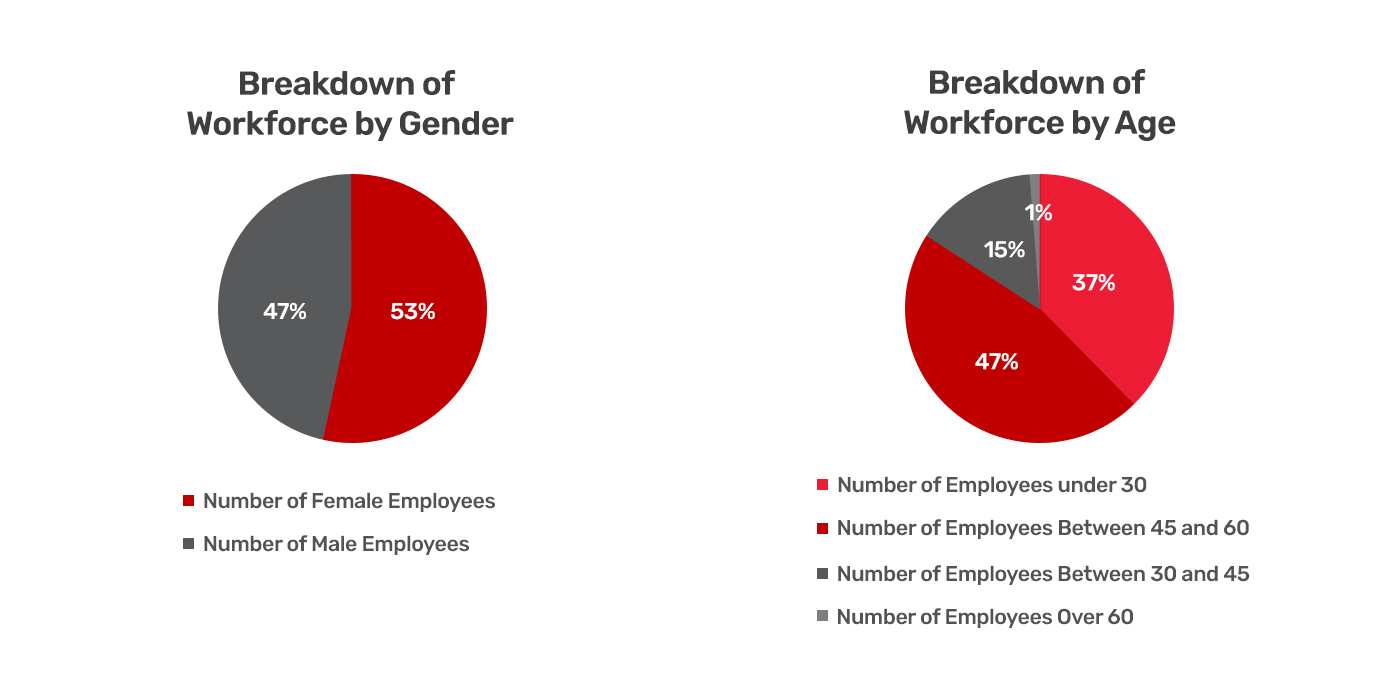
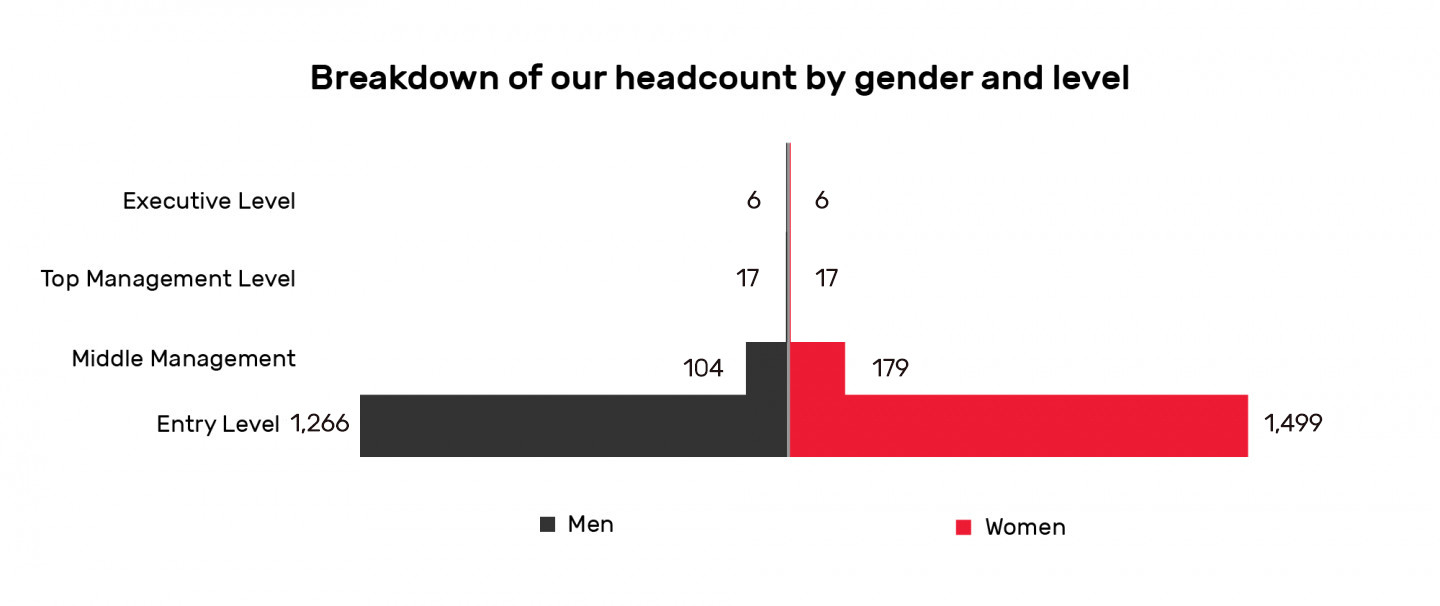
- 53% of our workforce are women.
- 37% of our people are younger than 30 years old.
- The Board comprised 6 directors, all of whom were male.
- 66.7% of directors were aged 70 years and above, 16.7% were aged between 60 and 69 years, and 16.7% were aged between 50 and 59 years.
Training and Development
- 67,446 total training hours delivered.
- 2,950 employees participated in training programmes.
- Average training hours per employee are 20.2 hours.
- 203 training sessions conducted.
Energy and Carbon
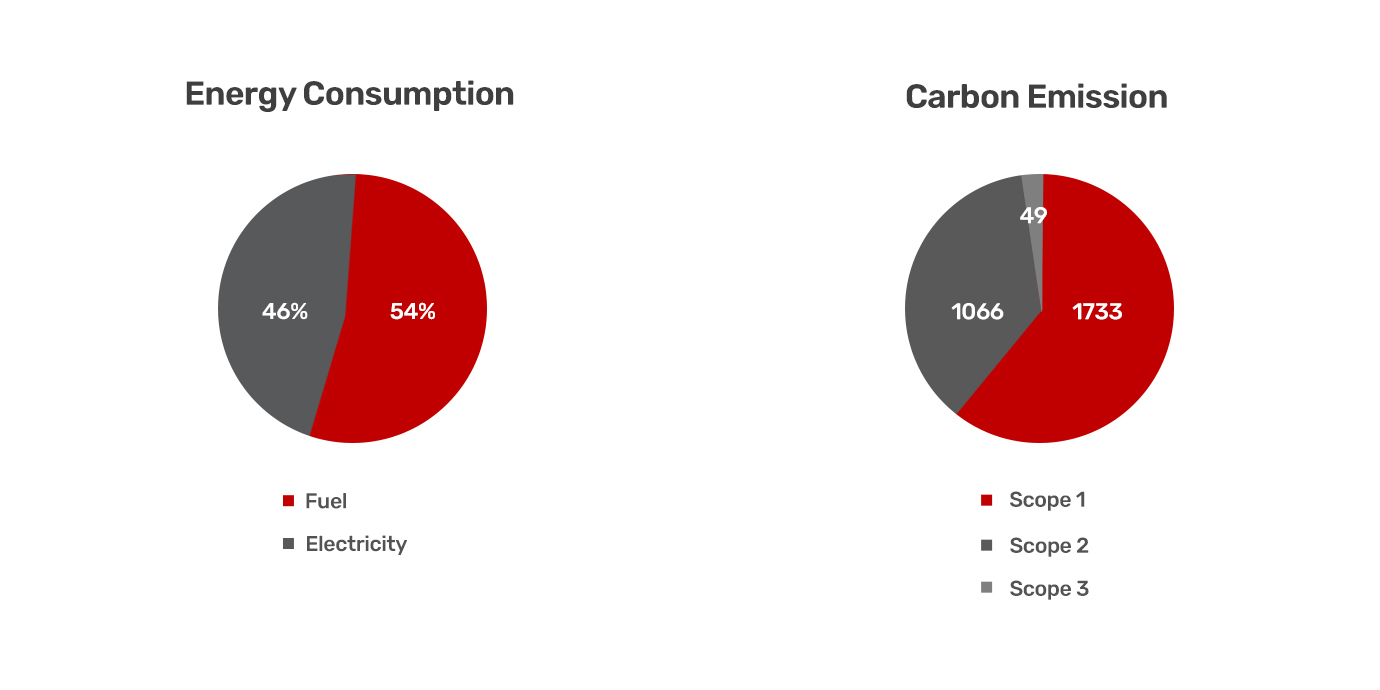
- Energy expenditure exceeded MMK 4535 million during the year.
- Total greenhouse gas emissions decreased to 2,848 tCO₂e in FY 2025-2026 from 3,750 tCO₂e in FY 2024-2025, comprising Scope 1 emissions of 1,733 tCO₂e, Scope 2 emissions of 1,066 tCO₂e, and Scope 3 emissions of 49 tCO₂e.
Supply Chain
- 79% of procurement expenditure on goods and services spent with Myanmar-based suppliers.
- 87% of the suppliers were local.
Product Responsibility
- 32% of customers are using digital banking and mobile apps.
- Financing provided to more than 9,500 SMEs as of December 2025.
- SME financing represented 38.3% of the total financing portfolio as at December 2025.